
CISM – Domain 2 Detailed Overview: CISM Domain 2 focuses on Information Risk Management, which is about identifying, assessing, and treating information security risks in alignment with business objectives and risk appetite. It covers how an organization establishes a structured risk management process, including defining risk tolerance, performing risk assessments, evaluating threats and vulnerabilities, selecting appropriate risk treatment options (mitigate, transfer, avoid, or accept), and ensuring risks are continuously monitored and reported to stakeholders.
A key emphasis of this domain is ensuring that risk decisions are business-driven rather than purely technical, and that senior management has clear visibility into how information security risks may impact organizational goals, operations, and regulatory obligations
Table of Contents
1. Risk Management Framework (e.g., ISO 31000, NIST)
A Risk Management Framework (RMF) is the structured, repeatable process that an organization uses to identify, assess, respond to, and monitor risk. It is the “blueprint” for the entire risk management lifecycle.
- From a CISM perspective: You do not need to memorize every step of a specific framework, but you must understand that a framework provides consistency, accountability, and integration with business processes.
- ISO 31000: This is a principles-based framework that emphasizes integrating risk management into all organizational activities, from governance to decision-making. It provides high-level guidelines, not specific controls. Its core process is: Scope, Context, Criteria → Risk Assessment (Identify, Analyze, Evaluate) → Risk Treatment → Monitoring & Review.
- NIST (Specifically NIST SP 800-30 and SP 800-39): This is more prescriptive and widely used in U.S. federal and critical infrastructure sectors. NIST 800-39 provides a tiered approach (organizational, mission/business, and information system levels). NIST 800-30 focuses heavily on the step-by-step execution of a risk assessment (preparing, conducting, communicating, and maintaining).
- Managerial Focus: The framework you choose must be tailored to your organization’s size, industry, and regulatory environment. Your job is to ensure the framework is dynamic and continuously updated as the threat landscape evolves.
2. Risk Governance and Oversight
Risk governance is the top-down structure of authority, accountability, and decision-making that defines how risk is managed across the enterprise. Oversight is the process of monitoring to ensure that risk is being managed within agreed-upon tolerances.
- From a CISM perspective: This is where security ceases to be an IT issue and becomes a business issue.
- Board and Executive Management: They hold the ultimate fiduciary responsibility for risk. They define the risk appetite and approve the overall strategy. The CISM’s role is to inform and advise this level, providing clear, non-technical risk reports so they can make informed decisions.
- Risk Committee: A cross-functional committee (representing legal, finance, operations, and IT) that oversees the risk program, ensures alignment with business objectives, and resolves conflicts regarding risk priorities.
- Three Lines of Defense Model: This is a key governance concept you must know.
- First Line: Operational management (owns and manages risk).
- Second Line: Risk and compliance functions (oversees and monitors risk).
- Third Line: Internal Audit (provides independent assurance).
- Managerial Focus: Governance ensures that risk decisions are made at the correct level. For example, accepting a high-risk vendor relationship cannot be decided by a security analyst; it must be escalated to the risk committee or executive level.

3. Risk Appetite, Risk Tolerance, and Risk Capacity
These three concepts are often confused but are distinctly different and critical for strategy.
- Risk Appetite: The total amount and type of risk an organization is willing to pursue or retain in order to achieve its strategic objectives.
- Example: A tech startup may have a high appetite for data-sharing risks to innovate quickly. A bank has a very low appetite for financial fraud risk.
- CISM Focus: This is set by the Board. It is a qualitative statement (e.g., “We are aggressive in adopting cloud technology but conservative regarding customer data privacy”).
- Risk Tolerance: The acceptable level of variation or deviation from the risk appetite. It translates the high-level appetite into measurable, specific limits or thresholds for individual business units, projects, or risk categories.
- Example: The appetite is “low for data breaches.” The tolerance is “we will accept a maximum of 3 minor data leakage incidents per quarter, but zero major incidents involving PII.”
- CISM Focus: This is where KRIs (Key Risk Indicators) come into play. You set tolerances to trigger alerts when risk is approaching the appetite limit.
- Risk Capacity: The maximum amount of risk an organization can absorb before it becomes insolvent, severely damaged, or fails to meet its core objectives.
- Example: The total financial loss the company could sustain from a cyber-event and still remain operational.
- CISM Focus: The risk program must ensure that the aggregate of all taken risks (appetite) never exceeds the organization’s risk capacity. It’s the “absolute ceiling.”
4. Risk Identification (Asset, Threat, Vulnerability)
Risk identification is the foundational step of the risk assessment—you cannot manage what you do not know.
- Asset Identification: Identifying what the organization values and needs to protect. This includes tangible assets (hardware, facilities) and intangible assets (intellectual property, reputation, customer data, business processes). The value of an asset is not just its replacement cost, but its criticality to business operations (e.g., the loss of a CRM system might halt sales for 48 hours).
- Threat Identification: Identifying the potential causes of an unwanted incident. Threats can be:
- Natural (fires, floods)
- Human (malicious insiders, hackers, social engineers, errors)
- Environmental (power outages, hardware failures)
- CISM Focus: You focus on the threat actors and their capabilities, intent, and opportunity. A sophisticated state-actor is treated differently than a hacktivist.
- Vulnerability Identification: Identifying the weaknesses or gaps in your controls that a threat could exploit. These can be technical (unpatched software), procedural (lack of employee training), or physical (unlocked server rooms).
- CISM Focus: You must look at the attack surface (all points where an unauthorized user can enter) and map assets to threats to vulnerabilities. The classic formula you must know is: Risk = Threat x Vulnerability x Impact (Asset Value).
5. Risk Assessment Methodologies (Qualitative, Quantitative, Semi-Quantitative)
Risk assessment is the process used to determine the likelihood and impact of risks to prioritize responses.
- Qualitative Risk Assessment:
- This is the most common method. It uses scenarios and subjective rankings (e.g., High, Medium, Low) to assess risk.
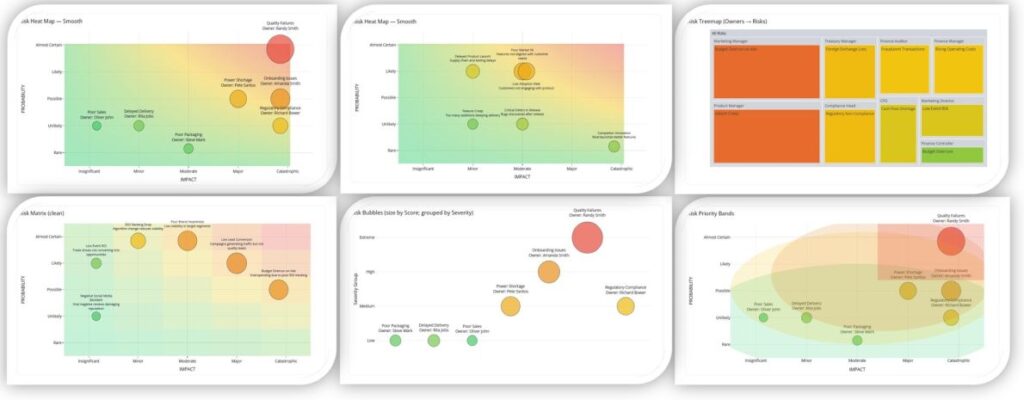
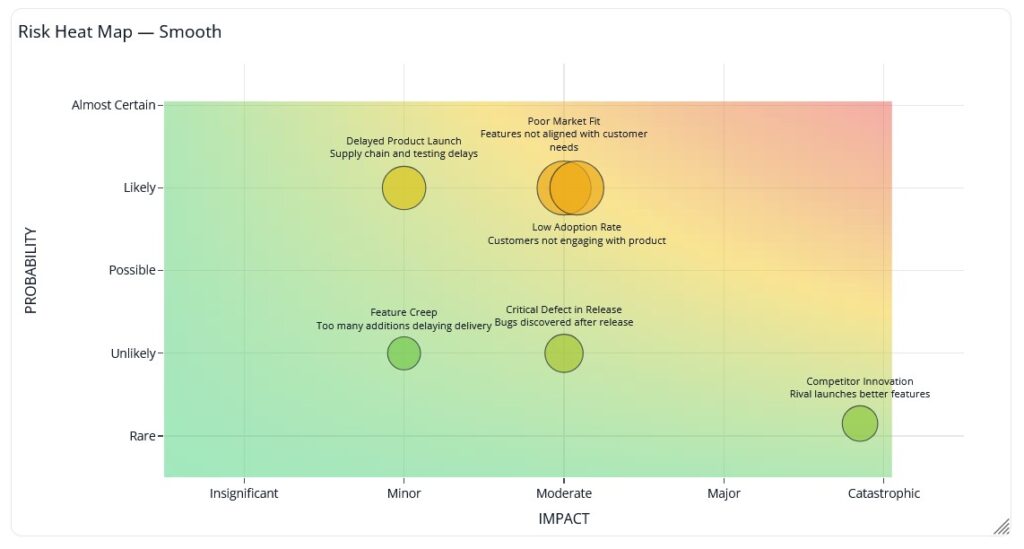
- It relies on the knowledge and experience of subject matter experts (SMEs) and uses tools like heat maps or risk matrices. FREE Heat Map Tool For Risk Management – 6 Excellent Templates – Exceediance
- CISM Focus: It is faster and easier to implement. It is excellent for getting executive buy-in because it is easy to understand. The downside is it is subjective; one manager’s “High” risk is another’s “Medium.”
- Quantitative Risk Assessment:
- This attempts to assign monetary values to risk. It uses hard data and calculations to express risk in financial terms (e.g., dollars).
- Key concepts you must know:
- SLE (Single Loss Expectancy): The monetary loss each time a threat occurs. (SLE = Asset Value x Exposure Factor)
- ARO (Annualized Rate of Occurrence): How many times a threat is expected to occur in a year.
- ALE (Annualized Loss Expectancy): The expected annual loss. (ALE = SLE x ARO)
- CISM Focus: This is highly accurate and justifies security spending in the language of the business (money). However, it is extremely difficult and time-consuming to gather reliable data for complex risks.
- Semi-Quantitative Risk Assessment:
- A hybrid approach that uses qualitative scales (e.g., 1-5) and then applies quantitative calculations to those rankings.
- For example, you might assign a monetary range to each impact level (e.g., “High Impact” = $1M-$5M) instead of using exact calculations.
- CISM Focus: This is the most pragmatic approach in the real world. It provides more structure than purely qualitative assessments while avoiding the complexity of full quantitative analysis. It allows you to prioritize risks with better granularity (e.g., a score of 4.6 vs. 2.1) while still being relatively fast.
6. Risk Analysis (Inherent Risk and Residual Risk)
Risk analysis is the process of understanding the nature, sources, and causes of risks you have identified, and estimating the level of risk. It is the “calculation” phase of the risk assessment.
- Inherent Risk: This is the level of risk that exists before any controls or countermeasures are applied. It represents the raw, unfiltered exposure an organization faces from a specific threat exploiting a vulnerability, assuming no protective measures are in place.
- Example: Storing sensitive customer PII on an internet-facing server with no firewall, no encryption, and no access controls.
- CISM Focus: Inherent risk is used for strategic decision-making. It helps answer: “Do we even want to enter this business line or undertake this project given the raw exposure?” It sets the “worst-case” baseline.
- Residual Risk: This is the level of risk that remains after controls, mitigations, and countermeasures have been implemented. It is the risk the organization actually lives with on a day-to-day basis.
- Example: The same PII is now encrypted, behind a firewall, with strict access controls and logging. The remaining risk (e.g., zero-day exploit or insider threat) is the residual risk.
- CISM Focus: The fundamental goal of risk management is to ensure that residual risk falls within the organization’s risk tolerance. If residual risk exceeds tolerance, you must implement additional controls or escalate to management for formal acceptance. You must regularly monitor residual risk as threats and business contexts change.
- Managerial Takeaway: You cannot manage inherent risk directly—it is a given. You manage residual risk by designing and implementing controls. The gap between inherent and residual risk is the effectiveness of your security program.
7. Risk Evaluation and Prioritization
Risk evaluation is the process of comparing the results of risk analysis (inherent and residual risk levels) against the organization’s established risk criteria (appetite and tolerance) to determine which risks require action and in what order.
- Risk Prioritization: Since resources (budget, time, personnel) are finite, you must rank risks to address the most critical ones first. Prioritization is typically based on:
- Impact Severity: What is the potential damage to the business (financial, reputational, operational, legal)?
- Likelihood: How probable is the risk event?
- Velocity: How quickly will the risk materialize? A slow-burning risk (e.g., outdated encryption standards) may be deprioritized behind a fast-moving risk (e.g., an active exploitation campaign).
- Business Criticality: Which business processes or assets are most vital to revenue and mission?
- Risk Heat Maps/Matrices: These are common visual tools used to plot risks based on likelihood (x-axis) and impact (y-axis). Risks in the “red zone” (high likelihood, high impact) are top priority.
- CISM Focus: You must present these evaluations to executives in a clear, non-technical format. Prioritization is not a purely technical exercise; it must involve business stakeholders who understand the operational context.
- Managerial Takeaway: Risk evaluation is the bridge between analysis and action. It forces you to answer: “Given our appetite, which risks are acceptable, and which require immediate management attention?”
8. Risk Treatment Options (Avoid, Mitigate, Transfer, Accept)
Once risks are analyzed and prioritized, you select a risk treatment strategy. There are four primary options (often remembered by the acronym “AMTA”).
- Avoid: Eliminating the risk entirely by discontinuing the activity, process, or asset that gives rise to the risk.
- Example: Deciding not to launch a new mobile app that requires storing sensitive customer data.
- CISM Focus: This is the most definitive option but often limits business growth. It should be a conscious business decision, not a default security reaction.
- Mitigate (Reduce): Implementing controls and safeguards to reduce either the likelihood or the impact (or both) of the risk to an acceptable level.
- Example: Deploying firewalls, encryption, multi-factor authentication, and security awareness training.
- CISM Focus: This is the most common treatment. You must ensure the cost of controls (in money, time, and operational friction) does not exceed the value of the asset being protected (cost-benefit analysis).
- Transfer (Share): Shifting the financial or operational burden of the risk to a third party.
- Example: Purchasing cyber insurance, outsourcing to a managed security service provider (MSSP), or including indemnification clauses in vendor contracts.
- CISM Focus: Transfer does not eliminate the risk; it only shifts the financial consequences. The organization still retains reputational and regulatory accountability. A key concept: you can transfer risk, but you cannot transfer responsibility.
- Accept: Acknowledging the risk and consciously choosing to retain it without taking any action, because it falls within the organization’s risk tolerance or the cost of mitigation outweighs the potential loss.
- Example: Accepting the minor risk of a low-impact phishing email affecting a non-critical department.
- CISM Focus: Acceptance must be formal and documented. It is not a “do nothing” decision—it requires explicit approval from a risk owner or executive management. It is often used for low-impact, low-likelihood risks or risks where mitigation is impractical.
- Managerial Takeaway: The selection of treatment is a business decision, not a technical one. You must present the pros, cons, and costs of each option to decision-makers.

9. Risk Response Selection and Implementation
This is the execution phase—once a treatment option is selected, you must operationalize it.
- Response Selection Criteria:
- Cost-Benefit Analysis: The cost of implementing the response (controls, personnel, technology) must be justified against the reduction in risk achieved.
- Feasibility: Is the response technically, operationally, and culturally feasible? Can it be implemented without disrupting critical business processes?
- Timeline: Is the response urgent? Critical vulnerabilities (e.g., zero-days) require immediate action, while others can be phased over time.
- Regulatory and Legal Obligations: Some responses are mandatory due to compliance requirements (e.g., GDPR, HIPAA, PCI-DSS).
- Implementation:
- Project Management: Treat risk response as a formal project with clear milestones, owners, budgets, and deadlines.
- Change Management: Implement controls through a structured change management process to avoid unintended disruptions.
- Phased Rollout: For complex controls, consider piloting in a non-critical area before full deployment.
- Training and Awareness: Ensure all affected personnel are trained on new procedures, policies, or technologies.
- CISM Focus: After implementation, you must perform post-implementation review to verify that controls are operating effectively and actually reducing risk to the expected residual level. This is not a one-time task—it is continuous.
10. Risk Ownership and Accountability
Risk ownership is the assignment of responsibility for managing a specific risk. Accountability is the obligation to report on and answer for that risk.
- Risk Owner: An individual (typically a business or process owner, not an IT technician) who is responsible for:
- Understanding the risk.
- Ensuring appropriate risk responses are implemented.
- Monitoring the risk and its controls.
- Reporting on the risk status to higher governance bodies.
- Escalating risks that exceed tolerance.
- Accountability: The risk owner is accountable to the risk committee, executive management, or the Board. Accountability cannot be delegated—only tasks can be. The ultimate accountability for enterprise risk rests with the Board and CEO.
- CISM Focus: Security professionals (like CISM candidates) are advisors and enablers. You provide the risk assessment, present options, and recommend controls, but the risk owner must make the final decision and accept the residual risk. This is a critical exam distinction—never take ownership of a business risk yourself.
- Managerial Takeaway: Clear ownership ensures risks do not fall through the cracks. If multiple risks are owned by the same person, ensure they have the capacity to manage them. If a risk owner refuses to act, you must escalate to governance.
11. Third-Party / Vendor Risk Management (TPRM)
Organizations increasingly rely on third parties (cloud providers, suppliers, partners, contractors) that introduce external risks. TPRM is the structured process of identifying, assessing, and mitigating risks associated with these relationships.
- Key Concepts:
- Due Diligence: Before onboarding a vendor, assess their security posture. This includes reviewing SOC 2 reports, ISO certifications, penetration test results, financial stability, and security policies.
- Contractual Safeguards: Include security and compliance requirements in contracts—such as right-to-audit clauses, breach notification timelines, data protection obligations, and indemnification.
- Ongoing Monitoring: Vendor risk is not a one-time assessment. Continuously monitor vendors for breaches, changes in control, financial distress, or negative security news.
- Tiering: Not all vendors pose the same risk. Classify vendors based on the sensitivity of data they access or the criticality of services they provide. High-risk vendors require deeper, more frequent assessments.
- Offboarding: Ensure secure removal of access and data upon vendor termination.
- CISM Focus: You cannot outsource risk; you can only outsource operations. Even if a vendor causes a breach, the organization retains full legal and reputational accountability. TPRM is a governance requirement, not optional.
12. Business Impact Analysis (BIA)
BIA is the systematic process of identifying and evaluating the potential effects of an interruption to critical business operations as a result of a disaster, accident, or emergency. It is foundational to business continuity and risk management.
- Key Objectives of a BIA:
- Identify critical business functions and processes.
- Determine the resources required to support these functions.
- Estimate the financial and operational impacts of a disruption (e.g., lost revenue, fines, reputational damage).
- Establish Recovery Time Objectives (RTO): The maximum acceptable time that a business process can be down before it causes unacceptable damage.
- Establish Recovery Point Objectives (RPO): The maximum acceptable data loss measured in time (e.g., “we can tolerate losing up to 4 hours of data”).
- Identify dependencies—both internal (other departments) and external (third parties, utilities).
- CISM Focus: The BIA is a business-led activity, not an IT exercise. IT executes the recovery, but the business defines the priorities and timeframes. The BIA directly informs risk prioritization—functions with the highest impact and shortest RTOs are the most critical risks to address.
- Managerial Takeaway: The BIA provides the “impact” side of the risk equation. Without a BIA, you cannot accurately assess risk, and you cannot justify investments in business continuity controls.
13. Risk Reporting and Communication to Executive Management and Board
Effective risk communication is perhaps the most critical skill for a CISM. You must translate complex technical risk data into clear, actionable business intelligence.
- Communication Objectives:
- Provide assurance that risks are being managed within tolerance.
- Highlight emerging or escalating risks.
- Justify security spending and resource requests.
- Enable executive decision-making.
- Key Reporting Principles:
- Tailor the Audience: The Board needs high-level strategic summaries (e.g., heat maps, top 10 risks, risk appetite alignment). Executives need actionable reports with resource implications. Operations managers need detailed technical data.
- Use Business Language: Avoid jargon like “CVSS scores,” “exploit chains,” or “zero-day payloads.” Translate into business impact: “Our top risk is a potential 48-hour outage of our e-commerce platform, estimated to cost $5M in lost revenue.”
- Visualize Data: Use dashboards, heat maps, and trend charts. Show how risks are changing over time.
- Include Risk Metrics: Report on KRIs (Key Risk Indicators)—early warning metrics that show risk is increasing (e.g., “number of unpatched critical vulnerabilities has risen by 20% this quarter”). Also report on KPIs (Key Performance Indicators) that show control effectiveness (e.g., “patch compliance is at 95%”).
- Highlight Residual Risk vs. Tolerance: Show management exactly where residual risk sits relative to the approved risk tolerance. If risk exceeds tolerance, flag it urgently.
- Escalation Triggers: Define clear thresholds for when a risk must be escalated to a higher level of management. For example, any risk with potential loss exceeding $1M must be escalated to the Board.
- Regular Cadence: Provide formal reports (monthly, quarterly, annually) as well as ad-hoc notifications for critical incidents.
- CISM Focus: Your credibility depends on transparency. Never hide risks or downplay issues—executives must make decisions based on accurate data. Always present options and recommendations, not just problems. And remember: communication is two-way; actively listen to executive feedback and business priorities to refine your risk program.
14. Key Risk Indicators (KRIs)
KRIs are quantifiable metrics used to measure the likelihood or impact of a risk event, providing an early warning signal that a risk is increasing or approaching the organization’s risk tolerance. They are predictive in nature.
- Characteristics of Effective KRIs:
- Predictive: They look forward, not backward. They alert you to potential future losses.
- Measurable: They are based on objective, quantifiable data.
- Actionable: They trigger a clear, predefined response when a threshold is breached.
- Business-Aligned: They reflect factors that matter to business objectives, not just technical metrics.
- Examples of KRIs:
- Cybersecurity: Number of unpatched critical vulnerabilities older than 30 days; percentage of employees who failed phishing simulations; rate of failed login attempts.
- Third-Party: Vendor’s security score dropping below a threshold; number of vendor-reported incidents.
- Operational: System uptime percentage; mean time to patch; number of privileged user access violations.
- CISM Focus: KRIs are distinct from KPIs (Key Performance Indicators) . KPIs measure the effectiveness of controls (e.g., “we patched 95% of systems this month”—how are we doing?). KRIs measure the risk exposure itself (e.g., “we have 50 unpatched critical vulnerabilities”—are we at risk?). Both are essential, but KRIs drive risk escalation and management decisions.
- Thresholds and Triggers: Each KRI must have defined thresholds (e.g., Green = within tolerance, Yellow = approaching tolerance, Red = exceeding tolerance). When a Red threshold is breached, a formal escalation process is triggered, and management must be notified.
- Managerial Takeaway: You must work with business stakeholders to define KRIs that are meaningful to them. A KRI that does not trigger a business action is useless. Regularly review and update KRIs as the business and threat landscape evolve.
Operational KRIs
- System outage duration
- Supply chain bottleneck frequency
- Customer churn rate
Security KRIs
- Unpatched critical vulnerabilities
- Phishing email click-through rate
- Time to detect unauthorized access
Financial KRIs
- Days Sales Outstanding (DSO)
- Budget variance percentage
- Credit rating downgrades
Compliance KRIs
- Audit non-conformance findings
- Missed regulatory filing deadlines
- Policy acknowledgment gaps
Strategic KRIs
- Time-to-market for new products
- Regulatory policy changes impact
- Geopolitical risk exposure score
15. Risk Monitoring and Review
Risk monitoring is the continuous process of tracking identified risks, assessing the effectiveness of controls, and identifying new or changing risks. Review is the periodic, formal evaluation of the entire risk management program.
- Continuous Monitoring Activities:
- Control Effectiveness Testing: Are controls operating as intended? This includes automated monitoring (e.g., SIEM alerts, vulnerability scans) and manual reviews (e.g., internal audits, control self-assessments).
- KRI Tracking: Regularly measure and report on KRIs to detect risk threshold breaches early.
- Incident Analysis: Review security incidents to understand root causes and identify gaps in risk treatment.
- Asset and Threat Changes: Monitor for changes in the asset inventory, new vulnerabilities, or shifts in the threat landscape (e.g., new ransomware groups targeting your industry).
- Periodic Review Activities:
- Formal Risk Reassessment: Conduct full risk assessments at defined intervals (e.g., annually) or when triggered by significant changes (e.g., mergers, new products, regulatory changes).
- Risk Register Review: Review and update the risk register to remove obsolete risks, add new ones, and update risk scores.
- Program Effectiveness Review: Evaluate whether the overall risk management framework is achieving its objectives and delivering value to the organization.
- CISM Focus: Risk is not static. A risk assessment is a snapshot in time; monitoring is the motion picture. You must institutionalize monitoring so that risk management becomes an ongoing business process, not a one-off compliance exercise. If you are not monitoring, you are assuming risk is unchanged—which is almost never true.
16. Risk Register Maintenance
A risk register is the central repository that documents all identified risks, their analysis, treatment plans, ownership, and status. It is the single source of truth for the organization’s risk profile.
- Typical Contents of a Risk Register:
- Risk ID: Unique identifier for each risk.
- Risk Description: Clear, concise statement of the risk (e.g., “Risk of data breach due to unpatched vulnerabilities in public-facing web applications”).
- Asset/Process Affected: What is at risk?
- Threat and Vulnerability: What could cause it, and what weakness is exploited?
- Inherent Risk Score: Likelihood and impact before controls.
- Existing Controls: What controls are already in place?
- Residual Risk Score: Likelihood and impact after controls.
- Risk Treatment Option: Avoid, Mitigate, Transfer, Accept.
- Action Plan: Specific steps, timeline, and resources for treatment.
- Risk Owner: Who is accountable?
- Status: Open, In Progress, Accepted, Closed.
- Review Date: When was it last reviewed, and when is the next review?
- KRI Alerts: Any associated KRIs and their current status.
- Maintenance Best Practices:
- Regular Updates: Update the register after risk assessments, incidents, or significant business changes.
- Version Control: Maintain an audit trail of changes to show governance and oversight.
- Access Control: Restrict write access to authorized risk managers, but provide read access to relevant stakeholders.
- Quality Assurance: Ensure risk descriptions are clear, non-technical, and understandable to business executives.
- CISM Focus: The risk register is your primary reporting tool. It is what you present to the Board and executive management. If your risk register is incomplete or outdated, your entire risk program loses credibility. It must be a living document, not a static spreadsheet.
17. Legal, Regulatory, and Contractual Compliance Requirements
Compliance is not optional—it is a mandatory constraint on the organization. Legal and regulatory requirements define the minimum baseline of risk management that must be met.
- Legal Requirements: Statutes and laws enacted by governments (e.g., GDPR, HIPAA, SOX, CCPA, GLBA). These carry potential fines, penalties, and even criminal liability.
- CISM Focus: You must understand which laws apply to your organization based on geography, industry, and data types. Legal requirements are often the starting point for risk treatment—you cannot accept a risk that violates the law.
- Regulatory Requirements: Rules and standards issued by regulatory bodies (e.g., PCI-DSS, NIST, ISO, FFIEC, Basel III). These are often industry-specific and detailed.
- CISM Focus: Compliance is a minimum standard, not a security strategy. Meeting regulatory requirements does not mean you are secure; it means you have met the baseline. You must go beyond compliance to address business-specific risks.
- Contractual Requirements: Obligations agreed upon in contracts with customers, partners, and vendors (e.g., data protection clauses, confidentiality agreements, service level agreements, audit rights).
- CISM Focus: Breach of contractual obligations can lead to lawsuits, financial penalties, and reputational damage. You must ensure security controls meet or exceed contractual commitments.
- Managerial Takeaway: Compliance is a risk management activity—it is about avoiding legal, financial, and reputational penalties. You must map compliance requirements to your risk register, treat them as non-negotiable risks, and ensure all controls are auditable. When conflicts arise (e.g., a regulation contradicts business strategy), you must escalate to legal and executive management for a formal decision.
18. Integration of Risk Management with Business Strategy and Objectives
This is the fundamental principle of CISM. Risk management is not a standalone function; it must be woven into the fabric of business planning and decision-making.
- Strategic Alignment:
- Risk Appetite Drives Strategy: The Board defines risk appetite, which in turn determines which business opportunities are pursued. For example, a low-risk-appetite organization may avoid entering markets with high cyber-risk exposure.
- Risk-Informed Decision Making: Every major business decision—new product launches, mergers and acquisitions, geographic expansion, technology adoption—must include a risk assessment. Security must be at the table during strategy discussions, not brought in after the decision is made.
- Resource Allocation: Budgets for security controls must be justified based on risk reduction. Investments are prioritized based on the risks that most threaten business objectives.
- Business Objectives Define Risk Priorities: A risk that threatens a core revenue-generating process is prioritized higher than a risk that affects a non-critical support function.
- CISM Focus: You must speak the language of the business—revenue, profit, market share, customer trust, competitive advantage. Frame risk in terms of impact on business objectives. For example, instead of saying “we need a new firewall,” say “we need to reduce the risk of a $10M revenue loss from a ransomware attack on our e-commerce platform.”
- Managerial Takeaway: The CISM’s role is to be a trusted business advisor, not a security gatekeeper. If your risk program is viewed as a “blocker” or a “cost center,” you have failed. If it is viewed as an “enabler” that helps the business take calculated risks safely, you have succeeded.
19. Cost-Benefit Analysis for Risk Controls
Cost-benefit analysis (CBA) is the process of comparing the cost of implementing a control against the expected reduction in risk (i.e., the financial benefit of avoiding a loss). It ensures that security spending is rational and justified.
- Components of CBA:
- Cost of Control: Includes direct costs (hardware, software, licenses, implementation fees, maintenance) and indirect costs (training, operational overhead, productivity loss, change management).
- Benefit of Control: The reduction in Annualized Loss Expectancy (ALE) . This is calculated as:
- Benefit = (ALE before control) – (ALE after control)
- Net Benefit: Benefit – Cost of Control. If positive, the control is financially justified.
- Example:
- ALE before MFA: $500,000 (likelihood 50% x impact $1M)
- ALE after MFA: $50,000 (likelihood 5% x impact $1M)
- Benefit: $450,000
- Cost of MFA Implementation: $100,000 (licenses, deployment, training)
- Net Benefit: $350,000 → Strong justification.
- CISM Focus: Not all controls are justified. If a control costs more than the risk it mitigates, it is a poor business decision. However, you must also factor in non-financial benefits such as reputational protection, customer trust, and regulatory compliance. Some controls are mandatory regardless of cost.
- Managerial Takeaway: Use CBA to build a business case for security investments. Presenting financial justification to executives is far more persuasive than presenting technical arguments.
20. Security Control Selection and Justification Based on Risk
Control selection is the process of choosing specific safeguards to reduce risk to an acceptable level. Justification is the rationale provided to decision-makers for why a particular control is necessary.
- Types of Controls:
- Preventive: Stop an incident from occurring (e.g., firewalls, encryption, access controls).
- Detective: Identify an incident when it occurs (e.g., SIEM, IDS/IPS, audit logs).
- Corrective: Restore systems and data after an incident (e.g., backups, incident response plans, patches).
- Deterrent: Discourage attackers from targeting the organization (e.g., security awareness, visible security measures).
- Compensating: Alternative controls that provide equivalent protection when the primary control is not feasible.
- Selection Criteria:
- Risk Reduction: How much does the control reduce likelihood and/or impact?
- Cost-Effectiveness: Is the benefit greater than the cost (CBA)?
- Feasibility: Can it be implemented technically and operationally?
- Compliance: Is it required by law or regulation?
- Organizational Culture: Will employees accept and use it?
- Defense in Depth: Controls should be layered to provide multiple barriers.
- Justification to Management:
- Translate technical controls into business terms.
- State the risk being addressed.
- Show the residual risk before and after the control.
- Present alternatives and their pros/cons.
- Provide cost estimates and expected ROI.
- Highlight compliance or contractual obligations.
- CISM Focus: You do not select controls in a vacuum. You select them based on risk priority, business impact, and available budget. Always document the rationale for selection—this is critical for audit and governance purposes.
21. Emerging Threat and Risk Landscape Monitoring
The threat landscape is constantly evolving. Emerging threats—new attack vectors, vulnerabilities, threat actors, and exploit techniques—can render existing controls obsolete overnight.
- Sources of Intelligence:
- Threat Intelligence Feeds: Commercial and open-source feeds that provide real-time data on threats (e.g., ISACs, CISA, FBI, vendor alerts).
- Industry Forums and Communities: Information sharing groups, sector-specific ISACs, and cybersecurity forums.
- Vulnerability Databases: NVD (National Vulnerability Database), vendor security bulletins.
- Dark Web Monitoring: Monitoring for stolen credentials, data leaks, and chatter about your organization.
- Peer Benchmarking: Understanding what threats your industry peers are facing.
- Monitoring Activities:
- Continuously assess how emerging threats affect your existing risk profile.
- Update risk assessments and KRIs based on new intelligence.
- Proactively adjust controls to address new threats (e.g., deploying patches for newly disclosed vulnerabilities, updating firewall rules for new attack patterns).
- Report significant emerging threats to executive management, especially those that could exceed risk tolerance.
- CISM Focus: This is a proactive activity. You cannot afford to wait for an incident to occur before adapting to a new threat. Your risk management program must be dynamic and agile.
- Managerial Takeaway: Emerging threat monitoring is not a technical “nice-to-have”—it is a governance requirement. You must demonstrate to the Board that you are aware of the evolving threat environment and taking appropriate actions to protect the organization.
22. Risk Culture and Awareness
Risk culture is the set of shared values, attitudes, and behaviors regarding risk across the organization. Risk awareness is the level of understanding employees have about risks and their role in managing them.
- Characteristics of a Strong Risk Culture:
- Top-Down Tone: Leadership models risk-aware behavior. They openly discuss risks, make risk-informed decisions, and encourage reporting of risks and incidents without fear of blame.
- Shared Responsibility: Everyone understands that risk management is not just the security team’s job—it is everyone’s job. Employees feel ownership of their own risk decisions.
- Open Communication: Risks and near-misses are reported proactively, not hidden. There is a “no blame” culture for honest mistakes.
- Risk-Informed Decision Making: Employees at all levels consider risk implications in their daily activities—from IT staff patching systems to sales teams handling customer data.
- Building Risk Awareness:
- Security Awareness Training: Mandatory, regular training that is tailored to different roles (e.g., executives, developers, finance, HR). Use real-world scenarios relevant to your industry.
- Phishing Simulations: Test and educate employees on recognizing social engineering.
- Risk Communication: Regularly share risk insights, incident lessons learned, and updates on the threat landscape with all employees.
- Metrics and Reporting: Share risk metrics (e.g., number of incidents, phishing click rates, patch compliance) transparently to show progress and identify areas for improvement.
- Incident Reporting Mechanisms: Make it easy and safe for employees to report potential incidents or risks (e.g., anonymous hotlines, simple reporting forms).
- CISM Focus: Risk culture is the “soft” but essential component of risk management. Controls can be bypassed by a single employee mistake. A strong risk culture is the ultimate control—it creates a human firewall. You must measure risk culture through surveys, incident reporting rates, and employee feedback.
- Managerial Takeaway: You cannot dictate culture; you must cultivate it. It requires consistent leadership commitment, clear communication, and ongoing reinforcement. A positive risk culture reduces residual risk significantly because employees become active participants in security, not passive obstacles.
Exceediance is going to provide Testing Simulator where you can assess your understanding of CISM concepts. Please search for CISM using top search bar.